Commercial Real Estate Debt: Complete Guide for Investors and Developers
Commercial real estate debt plays a pivotal role in the property investment ecosystem. It provides the financial foundation for developing, purchasing, or refinancing income-producing properties such as office buildings, retail centers, industrial warehouses, and multifamily apartments. Without debt financing, many large-scale projects would remain inaccessible to both developers and investors.
Understanding commercial real estate debt is essential for market participants, as it defines leverage, cash flow management, and overall investment strategy. By analyzing its structure, benefits, and use cases, stakeholders can make informed financial decisions that maximize returns while minimizing risk.
What is Commercial Real Estate Debt?
At its core, commercial real estate debt refers to borrowed capital used to acquire or improve properties intended for business or investment purposes. Unlike residential mortgages, which focus on individuals purchasing homes, commercial debt involves larger sums and more complex terms tailored to the income potential of the property.
These loans are typically secured by the property itself, meaning lenders have collateral in case of default. Depending on the financing arrangement, debt can be short-term for construction projects or long-term for stabilized assets. The flexibility of commercial real estate debt makes it a cornerstone of the global property market.
Types of Commercial Real Estate Debt
Commercial real estate debt takes many forms, each serving specific purposes:
-
Permanent Loans: Long-term financing used for stabilized, income-generating properties.
-
Bridge Loans: Short-term loans that provide temporary capital until permanent financing is arranged.
-
Construction Loans: Designed for development projects, covering costs from ground-up construction to renovation.
-
Mezzanine Debt: A hybrid structure between equity and debt, offering lenders higher yields in exchange for higher risk.
-
CMBS (Commercial Mortgage-Backed Securities): Pooled commercial mortgages sold to investors, creating liquidity in the market.
Each type of debt influences risk, return, and financing structure differently, making it critical to choose based on project goals and investor appetite.
Why Commercial Real Estate Debt Matters
Commercial real estate debt is more than just borrowing money; it is a tool for leveraging capital, improving liquidity, and optimizing financial strategies. Developers use it to reduce upfront capital requirements, while investors rely on it to enhance returns through leveraged investments.
Additionally, the presence of debt creates a structured repayment schedule, instilling discipline in cash flow management. For lenders, these loans provide consistent income through interest payments, making them attractive investment products in their own right.
Real-World Examples of Commercial Real Estate Debt
Multifamily Apartment Acquisition in Atlanta

A real estate investment firm acquired a 250-unit apartment complex in Atlanta using commercial real estate debt. The project was financed through a permanent loan with a competitive interest rate, allowing the sponsor to leverage rental income to cover loan repayments. By structuring the deal with debt, the firm minimized equity requirements while gaining exposure to long-term appreciation.
This example shows how debt enables investors to access high-value properties without tying up large amounts of capital, balancing risk and reward effectively.
Insert image of the product: Office tower under renovation, funded by a bridge loan
Office Tower Redevelopment in Los Angeles

A developer secured a bridge loan to renovate a downtown Los Angeles office tower. The short-term loan provided immediate capital for renovations until new tenants signed leases and stabilized cash flow, at which point the developer refinanced with permanent debt.
This highlights how commercial real estate debt can solve timing challenges, ensuring projects remain viable during transitional phases.
Insert image of the product: Construction site financed through a commercial construction loan
Industrial Warehouse Development in Dallas
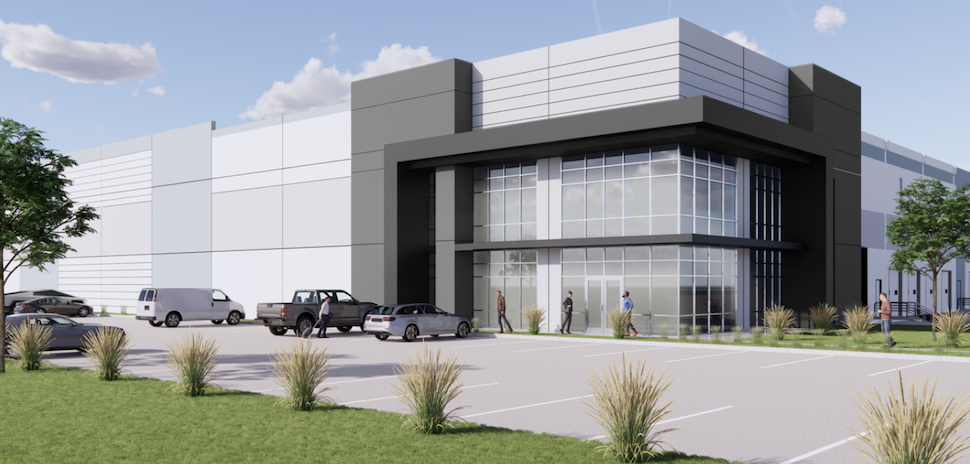
A logistics company expanded operations by constructing a 500,000-square-foot warehouse. Financing came through a construction loan, which covered land acquisition, materials, and labor. Once construction was complete and tenants secured, the loan converted into long-term financing.
This illustrates how debt can fuel growth and development, particularly in high-demand sectors like industrial logistics.
Insert image of the product: Medical facility portfolio financed via mezzanine debt
Healthcare Real Estate Portfolio

An investment group used mezzanine debt to expand its portfolio of medical office buildings. By layering mezzanine financing on top of traditional debt, the group accessed additional capital while maintaining equity control. The higher yield potential attracted lenders willing to share in the project’s upside.
This showcases how creative debt structures allow investors to pursue larger opportunities without diluting ownership.
Benefits of Commercial Real Estate Debt
Commercial real estate debt offers multiple advantages for both borrowers and lenders:
-
Leverage: Allows investors to control larger assets with less capital, amplifying potential returns.
-
Liquidity Management: Provides flexibility by freeing up equity for other investments or operational needs.
-
Risk Diversification: Debt can spread financial exposure across multiple properties rather than concentrating resources in one project.
-
Access to Institutional Assets: Enables smaller investors and firms to participate in large-scale commercial developments.
-
Predictable Returns for Lenders: Interest payments provide consistent income, making commercial debt an attractive fixed-income product.
These benefits underline why commercial real estate debt remains central to the property financing ecosystem.
How Technology Enhances Commercial Real Estate Debt
Technology has transformed how commercial real estate debt is originated, underwritten, and managed. Online lending platforms, data analytics, and AI-driven credit modeling now streamline processes that were once time-consuming and opaque.
Digital platforms allow borrowers to compare loan options, track repayment schedules, and access performance reports in real-time. For lenders, technology improves risk assessment by analyzing large datasets, enabling better pricing and structuring of loans. Ultimately, technology enhances transparency and efficiency, making debt financing more accessible and reliable.
Use Cases of Commercial Real Estate Debt
Commercial real estate debt addresses various challenges and opportunities:
-
Developer Financing: Provides capital for construction and redevelopment projects, ensuring progress without excessive equity requirements.
-
Portfolio Expansion: Investors can use debt to acquire multiple properties, diversifying income streams.
-
Value-Add Strategies: Bridge loans and mezzanine financing allow repositioning or renovating assets for higher returns.
-
Market Entry: Smaller firms gain access to institutional-grade properties through leveraged financing.
-
Stabilization: Refinancing with permanent loans ensures long-term stability after projects generate steady income.
These use cases demonstrate the flexibility and adaptability of debt in supporting diverse investment strategies.
Challenges of Commercial Real Estate Debt
While beneficial, commercial real estate debt also carries challenges. High leverage can amplify losses during downturns, and interest rate fluctuations may increase repayment burdens. Loan covenants may restrict borrower flexibility, while illiquidity remains a concern for long-term projects.
Understanding these risks is vital for both borrowers and lenders. Proper due diligence, conservative underwriting, and strategic planning help mitigate potential downsides.
Conclusion
CRE Debt Financing remains a cornerstone of global property investment. It enables developers to pursue ambitious projects, investors to maximize returns, and lenders to generate steady income. From permanent loans to mezzanine structures, the diversity of debt products ensures solutions for a wide range of financial needs.
By combining traditional financing with modern technology, CRE Debt Financing is evolving into a more efficient, transparent, and accessible tool. Investors and developers who understand its nuances are better positioned to navigate the complexities of today’s real estate markets.
FAQ
1. What is the difference between commercial real estate debt and equity?
Debt involves borrowed capital with repayment obligations, while equity represents ownership interest in the property. Debt provides fixed returns, whereas equity offers variable returns tied to property performance.
2. What are common types of CRE Debt Financing?
The most common types include permanent loans, bridge loans, construction loans, mezzanine debt, and CMBS. Each serves different purposes depending on the project stage and risk profile.
3. How does technology impact CRE Debt Financing?
Technology streamlines loan origination, improves risk assessment through data analytics, and enhances transparency for both borrowers and lenders, making the process more efficient.